Have you ever tried the KonMari method and failed? You are not alone.
As a busy Japanese mom of two elementary school kids, I used to struggle with keeping my home clutter-free too. While I love the essence of the KonMari method, it was simply too hard to maintain for someone lazy like me!
After years of trial and error, I found the perfect solution: a low-effort, fail-proof “System” that prevents any rebound chaos. Today, I’m sharing the 6 Japanese tidying secrets that keep my home organized effortlessly—even with kids around.
1.The “Less is More” Mindset: Declutter First
Before you rush to buy aesthetic storage boxes, there is one crucial step: you must reduce what you own.
As the famous KonMari method teaches, we should only keep items that “spark joy.” But as a busy mom, I quickly ran into a wall. If I only kept clothes that sparked pure joy, I wouldn’t have any practical clothes left to chase my kids around the park! The hurdle was simply too high for my daily reality.
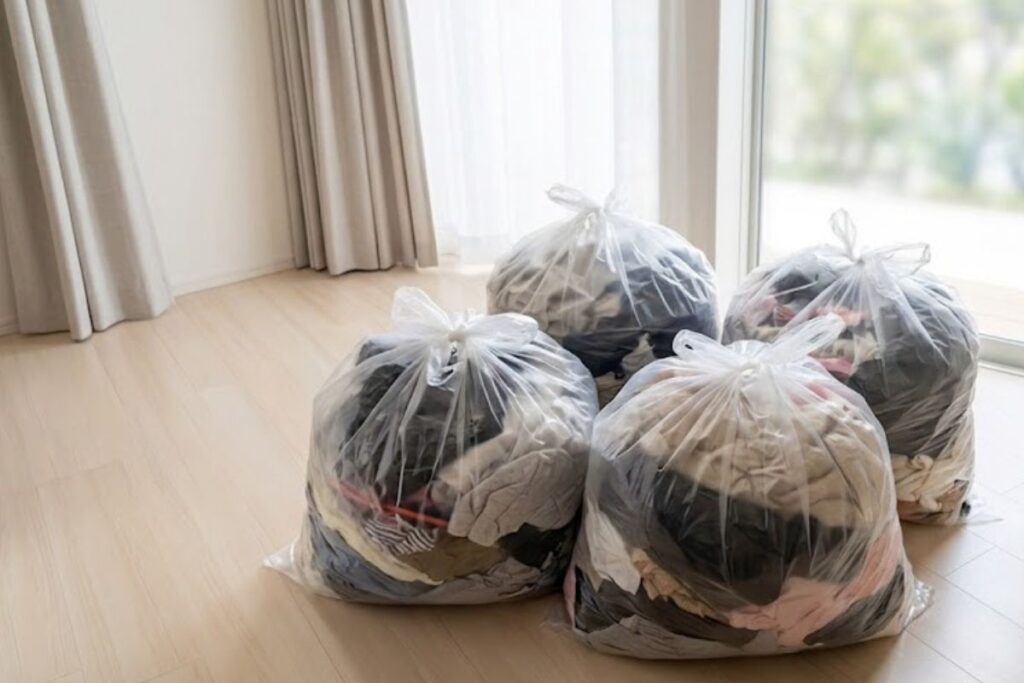
So, I lowered the bar. I decided to start by throwing away “clothes I wouldn’t even wear to a quick run to the local convenience store.” You’d be surprised how many items fit this description! Socks with holes, and T-shirts with old pasta sauce stains—getting rid of just these items made my drawers surprisingly spacious and easy to use.
Next, I tackled the hidden clutter: I found 5 or 6 pairs of scissors, dozens of dried-up pens, and magazines from years ago. These are easy to let go of once you actually look at them.
Finally, look at your kids’ changing lifestyles. Since my kids entered elementary school, their play styles changed. We had carefully saved toys from their kindergarten days, but when I asked my kids, they surprisingly said, “I don’t need this anymore.”
Instead of keeping them at home to sell on secondhand apps (which creates more temporary clutter while waiting for a buyer), I took everything to a local thrift store (buy-back shop) to clear them out in one go. Anything they couldn’t buy, I let them discard for me.
2.Design Layouts Based on Daily Routines & Flow
Designing storage around your daily movements (flow of traffic) is the most important secret to keeping a tidy home. To find the perfect storage spot, ask yourself: “Where do things naturally get dropped?”
Let’s look at the biggest culprits of clutter in any home: the kids. My elementary school children wear matching school caps and heavy backpacks everyday. The moment they walk through the door, they used to peel them off, drop them on the floor, and run straight to the bathroom to wash their hands. Sound familiar? Chaos starts right at the entrance!
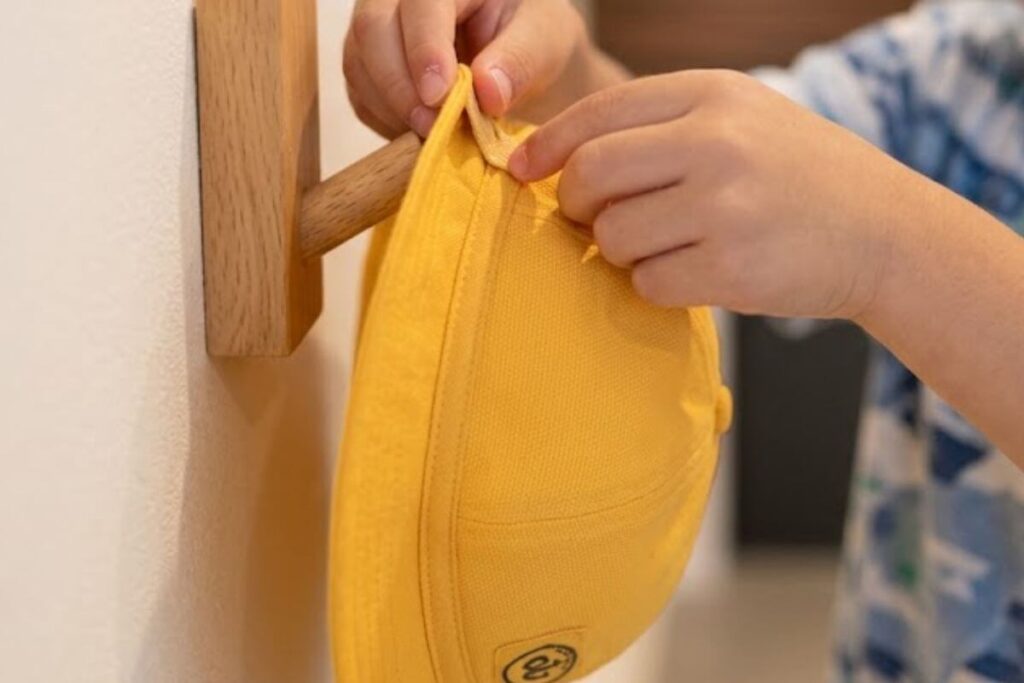
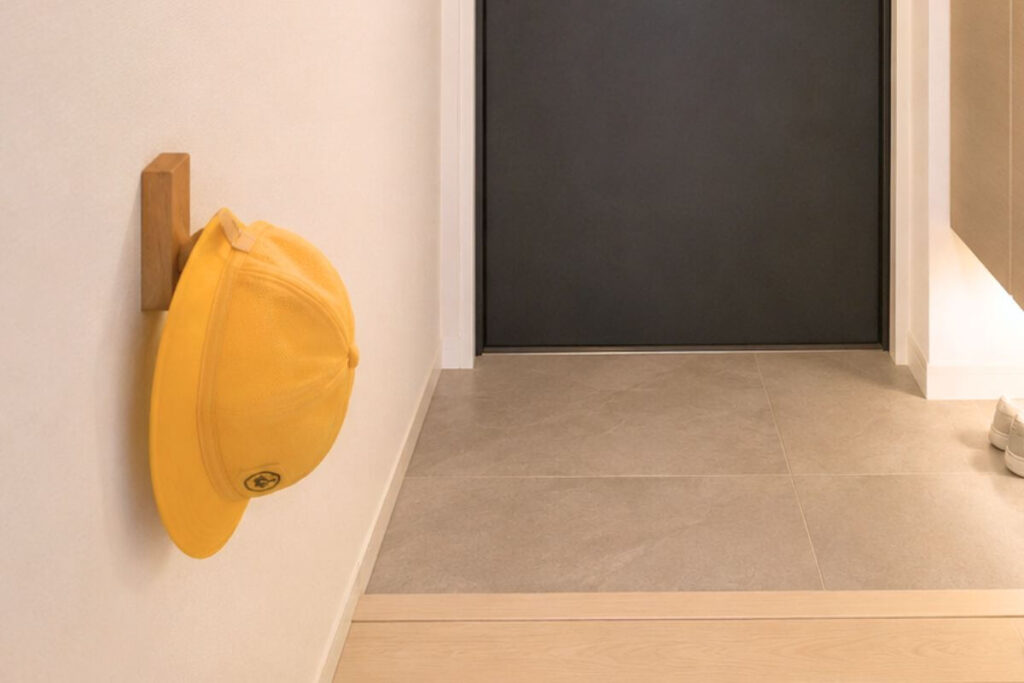
Since we take off our shoes at the entryway in Japan, I decided to utilize this natural routine. Right next to the door, at the kids’ eye level, I installed simple wall hooks. Now, as they take off their shoes, they can “just hang” their school caps in one easy motion. I also added larger hooks so that in winter, they can “just hang” their heavy coats. Since doing this, they never forget or lose their school gear.
If you are looking for simple, sturdy hooks that blend beautifully into any wall, I highly recommend the MUJI Wall Mounted Hooks. They are incredibly easy to install and completely renter-friendly since they leave only tiny pinholes!
My husband used to be the same way—he was a “drop everything and leave it” kind of person and constantly lost his keys. To fix this, I attached a magnetic hook panel (from the Japanese brand Tower / Yamazaki Jitsugyo) directly onto the inside of our metal front door. Now, the routine is simple: “Unlock the door, step inside, and immediately hang the keys.” He hasn’t lost his keys a single time since!
This magnetic key rack by Yamazaki Home is a total game-changer. The magnet is incredibly strong and sticks perfectly to our steel front door without sliding down or shifting at all—even when we hang heavy keychains. It works flawlessly every single time and is completely stress-free. I honestly can’t recommend it enough!
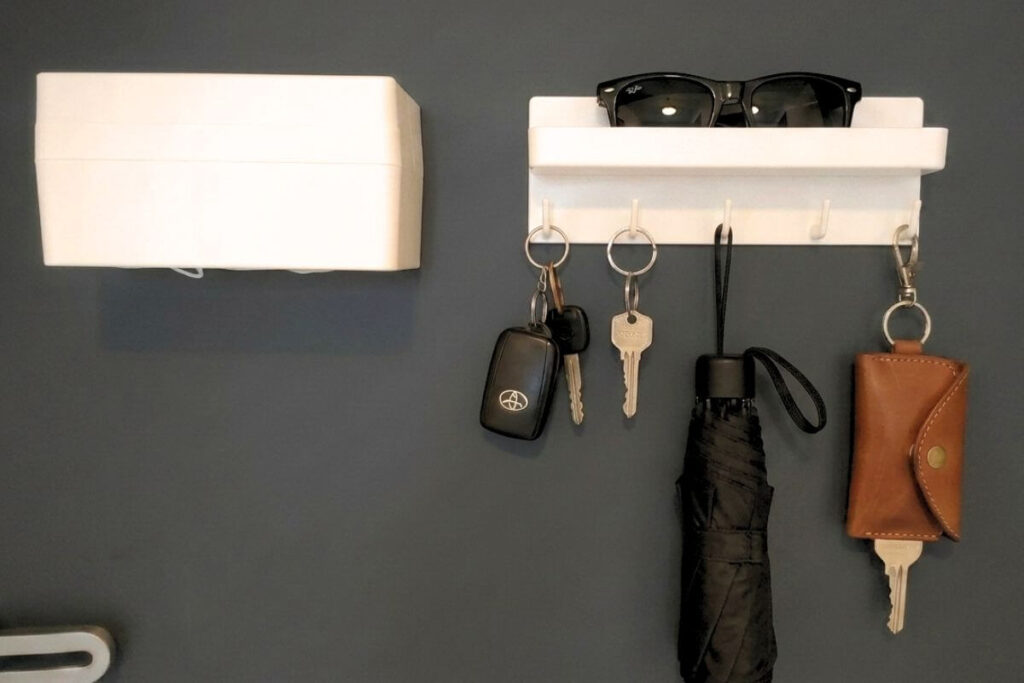
Note: On the right is the magnetic key rack by Yamazaki Home. While the exact white mask box on the left can be hard to find outside Japan, I found a perfect, highly-rated alternative on Amazon that works exactly the same way!
 ポチップ
ポチップ
Take a look at your own family’s daily routine. Identify the exact spot where clutter starts piling up, and ask yourself: “How can I make storing it easier than dropping it on the floor?” Once you match your storage with your natural daily flow, staying organized becomes effortless.
3.Reduce Steps to “One-Action Access”
Many organizing gurus love to talk about “hidden storage” to make a room look Pinterest-perfect. But let’s be honest: for a “lazy” family like mine, hidden storage quickly turns into a black box—a dark abyss where items go to be forgotten, or never put back.
A process like “open the drawer ➡️ open the box lid ➡️ put it away” is simply too many steps for daily life.
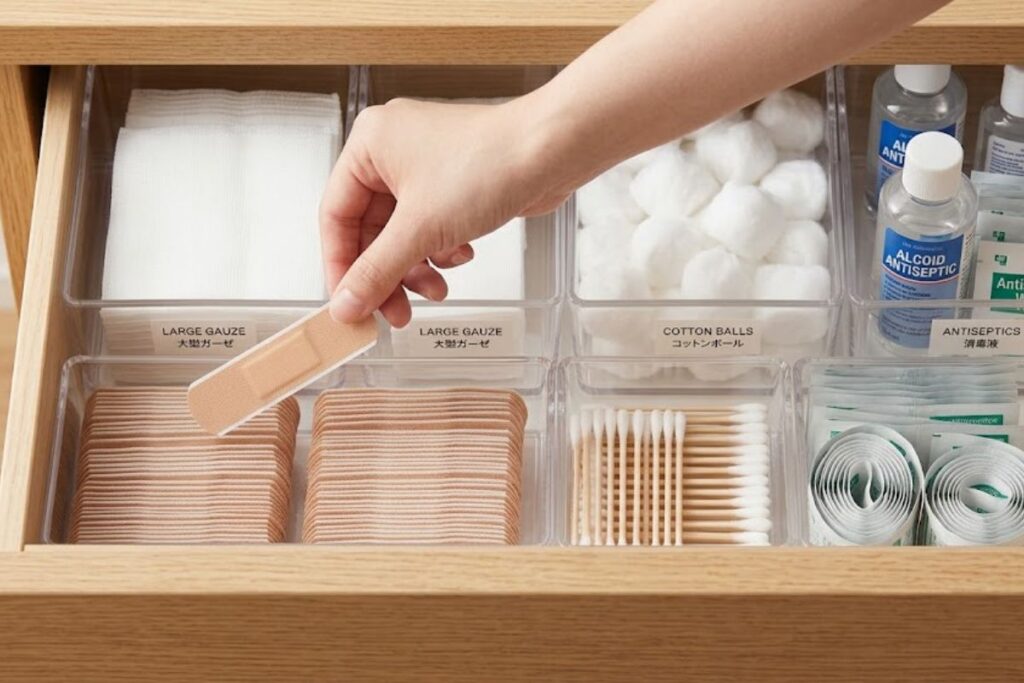
Take Band-Aids in our medicine drawer, for example. I used to store them the old way: “open the drawer ➡️ open the cardboard Band-Aid box ➡️ take one out.” The result? The cardboard box was always left open, and extra Band-Aids would end up scattered outside the box. It was always a mess.
To fix this, I focused on reducing the steps. Now, it’s a simple, seamless flow: “open the drawer ➡️ grab/drop it in one action.”
By ditching the box lids and choosing open, clear inserts, organizing becomes completely zero-effort. Reducing your storage to a single motion makes it incredibly easy to maintain, and a natural tidying habit forms without you even trying.
(Note: I shared the exact, detailed breakdown of my MUJI and DAISO medicine drawer setup in another post here! Check it out if you want to see the photos of how I did it!)
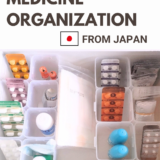 Messy Medicine Drawer? Easy Organization Idea Using Simple Storage Cups
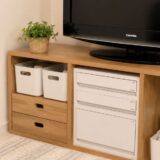 How I Cured Living Room Clutter (And Why This Renter-Friendly Japanese Shelf is a Lifesaver)
4.Give Every Item a Designated “Home”
In the past, whenever I felt frustrated by a messy room, I would snap at my kids and tell them to “Clean up your room!” One day, my child looked at me and asked, “But where does it go?”
I froze. It was an absolute lightbulb moment for me. How could I expect them to clean up when they didn’t even know where the items belonged?
In Montessori toy storage, it’s common to paste photos or drawings of toys onto shelves so children know exactly where to return them. I realized I needed to apply this exact Montessori concept to our entire home.
Take stationery, for example. If you create a generic drawer labeled “Stationery,” it will quickly turn into a chaotic mess where finding a pen becomes a chore. Instead, we use MUJI polypropylene storage boxes with small drawers and label each one meticulously.
As you can see in the photo below, this small change makes an incredible difference.
What I love most about these specific MUJI drawers is that they can be used both vertically and horizontally. You can simply rotate the drawers depending on your shelf space, making it incredibly versatile for any small apartment layout!
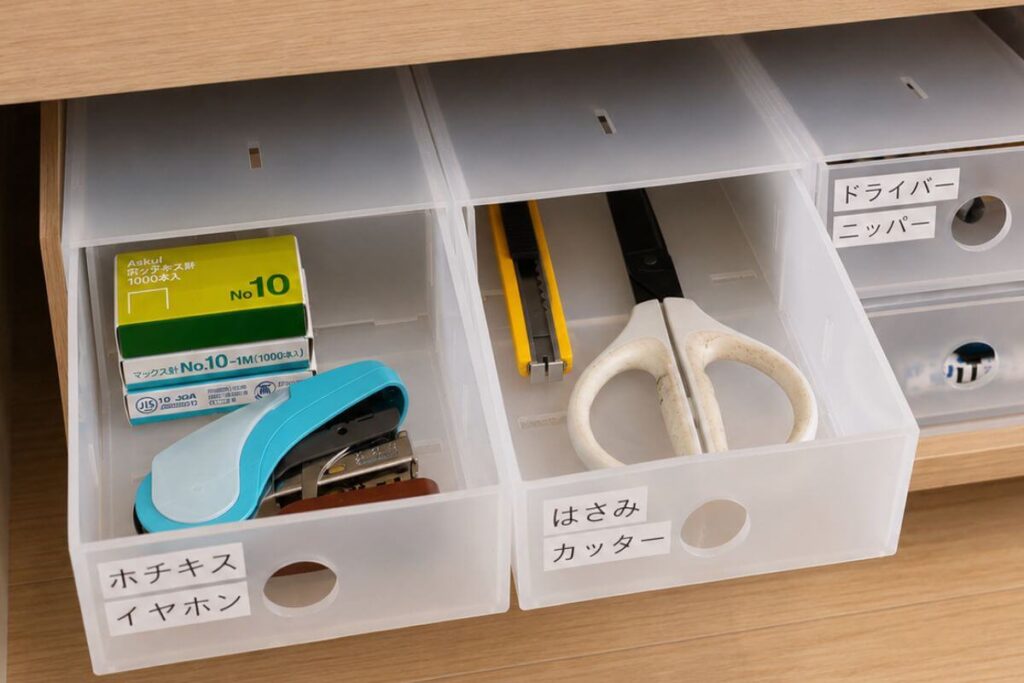
(Note: We love these MUJI drawers because they keep small items neat and easily accessible. Plus, the fact that you can use this unit vertically or horizontally means it adapts perfectly to your home, even if you move to a different rental later!)
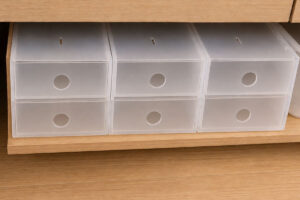
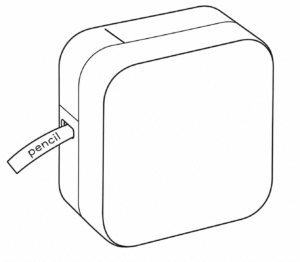
The secret here is never to overfill them. If a drawer is packed so tightly that it barely closes, both taking things out and putting them away become frustrating. We keep it spacious and finish it beautifully with a neat label maker (like a Brother P-touch / Tepra).
Brother is a highly trusted Japanese brand known for its incredible durability. In fact, our family has been using a Brother home printer for over four years now without a single issue! That’s why I highly recommend the Brother P-touch Cube for your home—it connects wirelessly to your smartphone so you can print beautiful minimalist labels in seconds. It’s a total game-changer for any Montessori-inspired setup.
Since making this change, I never hear “Mom, where are the scissors?” anymore. If your kids struggle with leaving their shoes scattered at the entryway, another effective Montessori hack is placing foot-shaped stickers on the floor to show them exactly where to park their shoes. Once every item has a clear, visual “home,” kids can naturally tidy up by themselves.
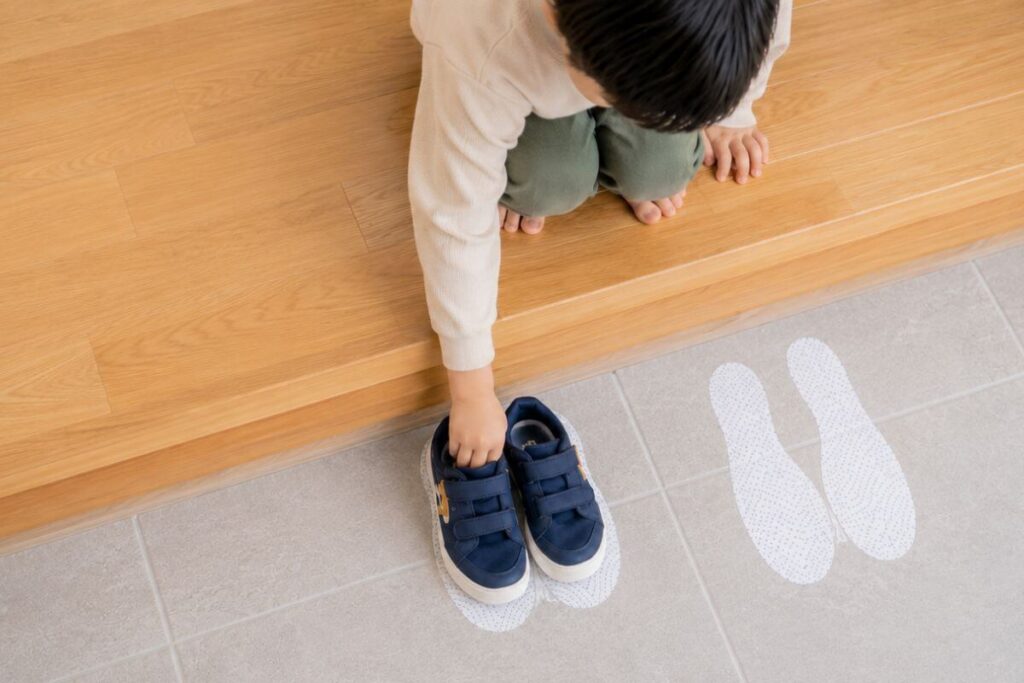
In Japan, it is a common custom to take off your shoes at the entryway. However, young kids often leave their shoes scattered all over the floor!
That is where these clever shoe placement stickers (footprint decals) come in handy.
Doesn’t seeing the shape of shoes on the floor naturally make you want to align your own shoes with them?
By using these stickers to show them, “This is where your shoes go,” kids will actually enjoy lining them up.
It’s a fun, visual way to help them build great tidying habits!
You can find a variety of these cute shoe placement stickers on Amazon to try in your own home!
5.Keep It Off the Floor with “Floating Storage”
For anyone who struggles with tidying up, what is the single most frustrating moment of the day? For me, it was always vacuuming. When the floor is covered in clutter, you have to spend half your energy picking things up and moving them around just to run the vacuum.
In fact, we used to own a Roomba robot vacuum. But because our floors were always so messy, the Roomba couldn’t do its job and ended up sitting in the closet, gathering dust instead of trash!
The secret to breaking this cycle is to keep everything off the floor. When your floors are completely clear, vacuuming takes seconds. Dust doesn’t accumulate, your home stays incredibly clean, and your belongings never get stepped on or dirty.
Best of all, “floating storage” naturally creates a designated “home” for your items, completely clearing Step 4.
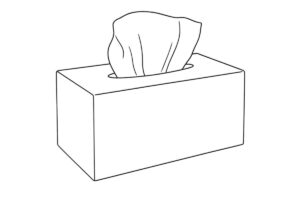
In our home, we float almost everything: we hang the AC remote on a wall hook, and hang the trash bin off a shelf. But my absolute favorite hack is our tissue boxes. I used cheap dollar store elastic bands to strap plastic tissue cases to all four legs of our dining table! Now, each family member has their own “personal tissue station” right at their seat, and it stays perfectly off the floor.
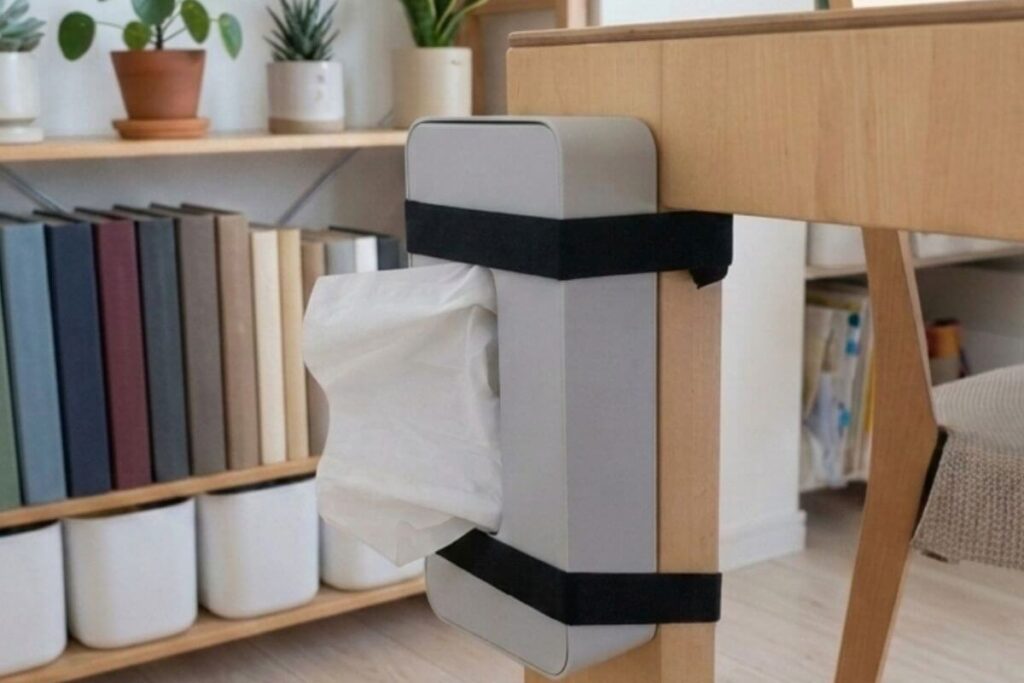
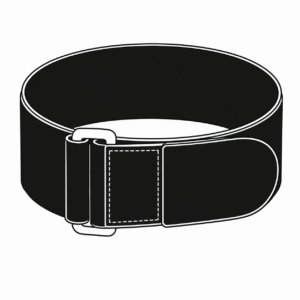
(Note: To recreate this floating setup, you need the right materials. I highly recommend using a tough acrylic tissue box with a magnetic bottom closure, paired with heavy-duty elastic cinch straps. Unlike flimsy fabric or plastic pouches, a rigid acrylic box won’t warp or crush when tightly strapped, allowing tissues to pull out smoothly. Plus, the magnetic bottom panel ensures the lid stays securely locked even when mounted vertically—meaning no tissues sliding down onto the floor! Here is the perfect combination available on Amazon to build your own personal tissue station:)
My child actually suffers from asthma, which means I have to vacuum frequently to keep our home allergen-free. Before, this was a massive chore. But since switching to this “floating storage” method, the friction of cleaning has vanished, and my daily vacuuming stress has plummeted to zero.
6.Master the Japanese Art of Vertical Folding
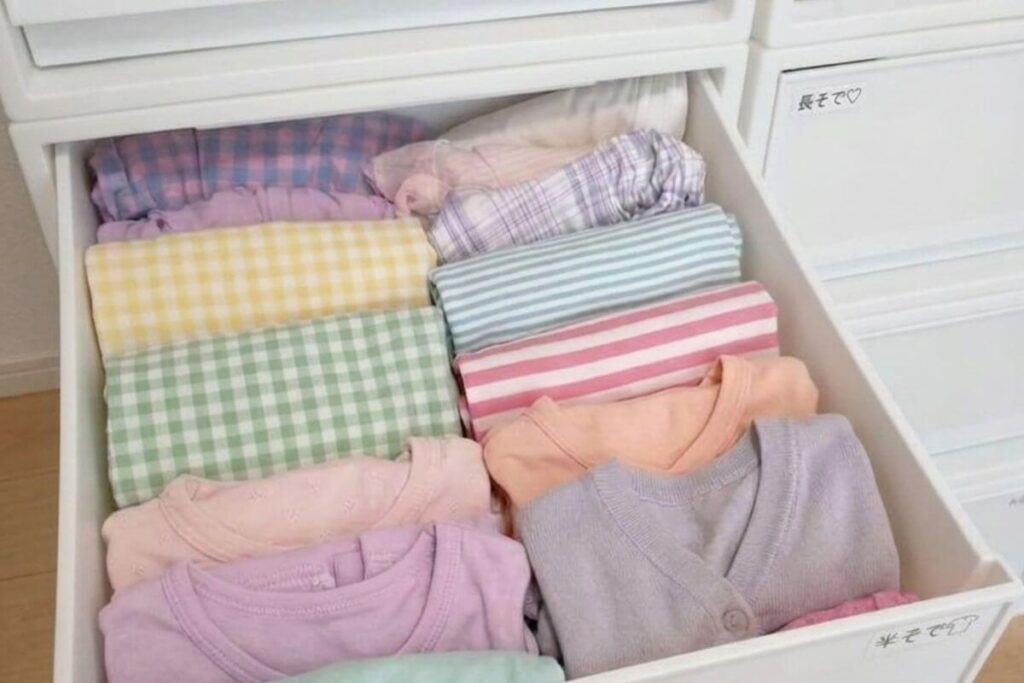
The ultimate Japanese space-saving secret is simple: “Fold it, and stand it up vertically.”
When you live in a small apartment with limited space, this vertical folding method is far more efficient than other common habits. Compared to alternative setups, the benefits are clear:
- Hanging storage: Requires way too much closet real estate, which is rare in tight spaces.
- Stacking clothes (like retail stores): A recipe for disaster. The moment you pull a shirt from the bottom, the whole pile collapses into a messy heap.
We have been using this Japanese vertical storage system since my kids were about three years old. The true beauty of this setup is that it creates a completely fail-proof, low-effort system that anyone in the family can maintain.
The secret lies in our solid white MUJI storage drawers. Every single drawer has a designated “home” with a clear label showing exactly what’s inside—such as “Undershirts” or “Socks.”
When my kids open the drawer, they can see every neatly folded option at a glance. All they have to do is pick their favorite shirt and pull it straight out without disturbing the rest. Even when my husband occasionally helps put the laundry away, the visual labels ensure he never makes the classic mistake of accidentally stuffing socks into the T-shirt drawer.
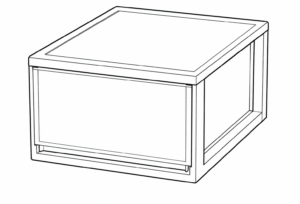
If you’re looking for an alternative to MUJI storage cases, I highly recommend the ones from IRIS USA available on Amazon. The 30 Qt. size is the closest match to the ones I personally use.
7.Conclusion
Tidying up isn’t about achieving perfection—it’s about creating a home that supports your daily life. You don’t need to overhaul your entire house in one day. Start small: add one hook by the door, try vertical folding in just one drawer, or clear a single surface.
Once you match your storage to your family’s natural flow, you’ll find that staying organized becomes effortless. I hope these tips help you create a space where you can spend less time cleaning and more time enjoying life with your family. Happy organizing!